
Holistic Well-Being: A Comprehensive Guide
This document explores the concept of holistic well-being, emphasizing its multifaceted nature and interconnectedness. It provides practical steps and strategies for cultivating holistic health, happiness, and harmony in both personal and professional life, ultimately leading to a state of overall well-being.
Understanding Holistic Well-Being
The Holistic well-being is an approach to wellness that considers the whole person, recognizing the inter-connectedness of physical, mental, emotional, social, and spiritual health. It’s not merely the absence of disease or illness, but a state of thriving in all aspects of life. Instead of focusing on isolated symptoms or problems, holistic well-being seeks to address the root causes of imbalances and promote overall harmony.
The core principle of holistic well-being is that each dimension of our being influences the others. For example, chronic stress (emotional) can manifest as physical symptoms like headaches or digestive issues. Similarly, a lack of social connection can negatively impact mental and emotional health.
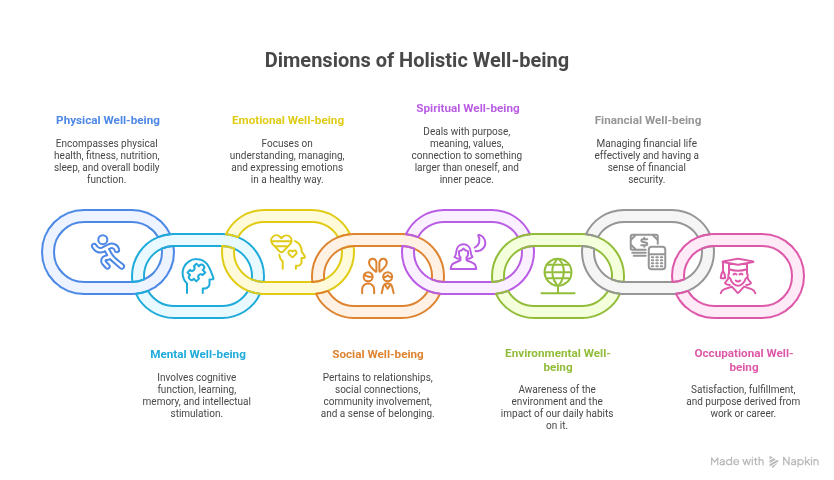
The key dimensions of holistic well-being include:
- Physical Well-being: Encompasses physical health, fitness, nutrition, sleep, and overall bodily function.
- Mental Well-being: Involves cognitive function, learning, memory, and intellectual stimulation.
- Emotional Well-being: Focuses on understanding, managing, and expressing emotions in a healthy way.
- Social Well-being: Pertains to relationships, social connections, community involvement, and a sense of belonging.
- Spiritual Well-being: Deals with purpose, meaning, values, connection to something larger than oneself, and inner peace.
- Environmental Well-being: Awareness of the environment and the impact of our daily habits on it.
- Financial Well-being: Managing financial life effectively and having a sense of financial security.
- Occupational Well-being: Satisfaction, fulfillment, and purpose derived from work or career.
Simple Steps to Raise Holistic Health, Happiness, and Harmony
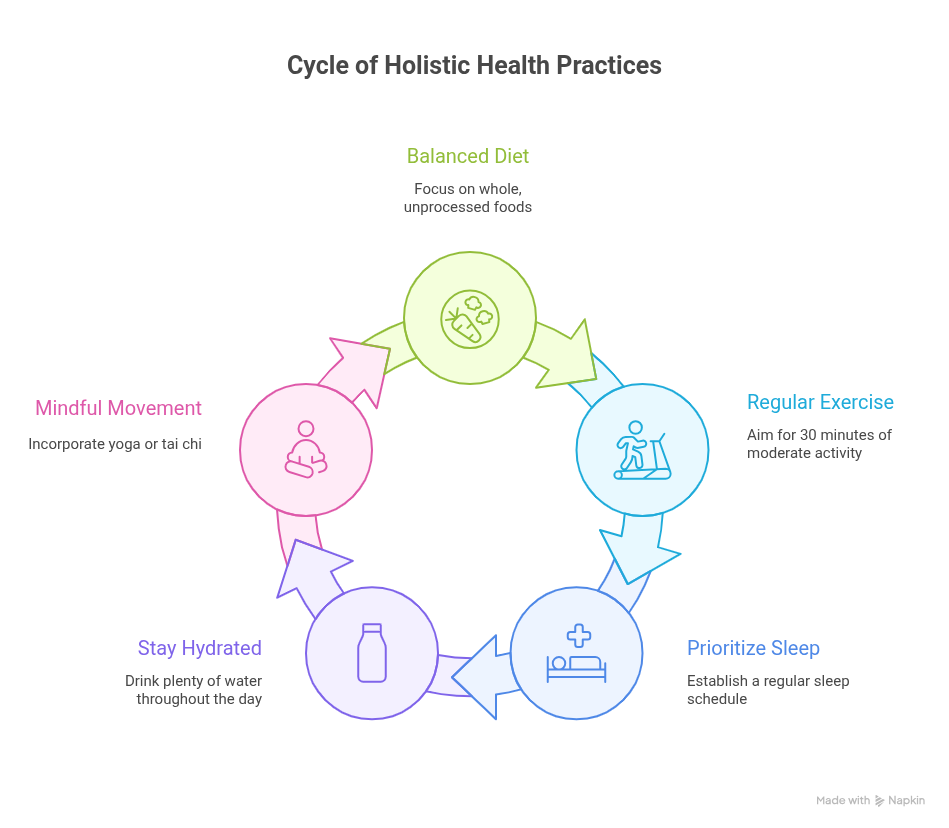
Achieving holistic well-being is a journey, not a destination. It requires conscious effort, self-awareness, and a commitment to making positive changes. Here are some simple steps to start incorporating into your daily life:
1. Nurture Your Physical Health
- Balanced Diet: Focus on whole, unprocessed foods, including plenty of fruits, vegetables, lean protein, and healthy fats. Limit processed foods, sugary drinks, and excessive caffeine or alcohol.
- Regular Exercise: Aim for at least 30 minutes of moderate-intensity exercise most days of the week. Find activities you enjoy, such as walking, running, swimming, dancing, or yoga.
- Prioritize Sleep: Establish a regular sleep schedule and aim for 7-9 hours of quality sleep per night. Create a relaxing bedtime routine and optimize your sleep environment.
- Stay Hydrated: Drink plenty of water throughout the day to support bodily functions and maintain energy levels.
- Mindful Movement: Incorporate activities like yoga, tai chi, or qigong, which combine physical movement with mindfulness and breathwork.
2. Cultivate Mental Clarity and Resilience
- Mindfulness Meditation: Practice mindfulness meditation for even just a few minutes each day to calm the mind, reduce stress, and increase self-awareness.
- Engage in Lifelong Learning: Challenge your mind by learning new skills, reading books, taking courses, or pursuing hobbies.
- Practice Gratitude: Regularly reflect on the things you are grateful for to boost your mood and increase positive emotions.
- Limit Screen Time: Reduce your exposure to screens, especially before bed, to improve sleep and reduce mental stimulation.
- Journaling: Write down your thoughts and feelings to process emotions, gain clarity, and track your progress.
3. Foster Emotional Intelligence and Well-being
- Identify and Express Emotions: Pay attention to your emotions and learn to identify and express them in a healthy way.
- Practice Self-Compassion: Treat yourself with kindness and understanding, especially during difficult times.
- Develop Coping Mechanisms: Learn healthy ways to cope with stress, such as exercise, meditation, or spending time in nature.
- Seek Support: Don’t be afraid to reach out to friends, family, or a therapist for support when you need it.
- Practice Forgiveness: Forgive yourself and others to release negative emotions and move forward.
4. Strengthen Social Connections
- Nurture Relationships: Invest time and effort in building and maintaining strong relationships with family and friends.
- Join a Community: Participate in activities or groups that align with your interests to connect with like-minded people.
- Practice Active Listening: Pay attention to what others are saying and show genuine interest in their thoughts and feelings.
- Volunteer: Give back to your community by volunteering your time and skills.
- Set Boundaries: Establish healthy boundaries in your relationships to protect your time and energy.
5. Explore Your Spirituality
- Connect with Nature: Spend time outdoors to appreciate the beauty and wonder of the natural world.
- Practice Gratitude: Reflect on the things you are grateful for to cultivate a sense of appreciation and contentment.
- Engage in Meaningful Activities: Pursue activities that give you a sense of purpose and meaning.
- Explore Different Spiritual Traditions: Learn about different spiritual traditions and find one that resonates with you.
- Practice Self-Reflection: Take time to reflect on your values, beliefs, and purpose in life.
6. Environmental, Financial and Occupational Well-being
- Environmental: Reduce waste, recycle, conserve energy, and support sustainable practices.
- Financial: Create a budget, save regularly, manage debt, and plan for the future.
- Occupational: Find work that is meaningful and fulfilling, set boundaries, and prioritize work-life balance.
Holistic Well-being in the Workplace
Holistic Well-being is not just a personal pursuit; it’s also essential for creating a healthy and productive workplace. Organizations that prioritize employee well-being tend to have higher employee engagement, lower absenteeism, and improved overall performance.
Here are some ways to promote holistic well-being in the workplace:
- Wellness Programs: Offer wellness programs that address physical, mental, emotional, and financial health.
- Flexible Work Arrangements: Provide flexible work arrangements, such as telecommuting or flexible hours, to help employees balance work and personal life.
- Stress Management Training: Offer stress management training to help employees cope with workplace stress.
- Employee Assistance Programs (EAPs): Provide access to EAPs that offer confidential counseling and support services.
- Promote a Positive Work Environment: Foster a positive work environment that is supportive, respectful, and inclusive.
- Encourage Breaks and Time Off: Encourage employees to take regular breaks and use their vacation time to recharge.
- Offer Opportunities for Professional Development: Provide opportunities for employees to learn new skills and advance their careers.
Conclusion
Holistic Well-being is a comprehensive approach to wellness that considers the inter-connectedness of physical, mental, emotional, social, and spiritual health. By taking simple steps to nurture each dimension of your being, you can cultivate greater health, happiness, and harmony in your life and workplace. Remember that the journey to holistic well-being is a continuous process of self-discovery and growth. Be patient with yourself, celebrate your progress, and embrace the journey towards a more balanced and fulfilling life.